
ไทย
พระสถูป หรือพระเจดีย์ เป็นศาสนสถานที่บรรจุพระบรมสารีริกธาตุ และเป็นศูนย์รวมจิตใจของชาวพุทธ ให้น้อมระลึกถึงพระคุณต่างๆ ของพระสัมมาสัมพุทธเจ้า โดยมีพระปัญญาคุณพระบริสุทธิคุณ และพระมหากรุณาธิคุณเป็นต้น
แต่เดิมสถูปคือเนินดินอันสูงใหญ่ที่ก่อสร้างหลังเหตุการณ์ปรินิพพานของพระพุทธเจ้า ต่อมาเมื่อพระพุทธศาสนาได้เผยแผ่ไปสู่ประเทศต่างๆ สถาปัตยกรรมทางพระพุทธศาสนาก็ได้พัฒนาตามศิลปะวัฒนธรรมของประเทศนั้นๆ
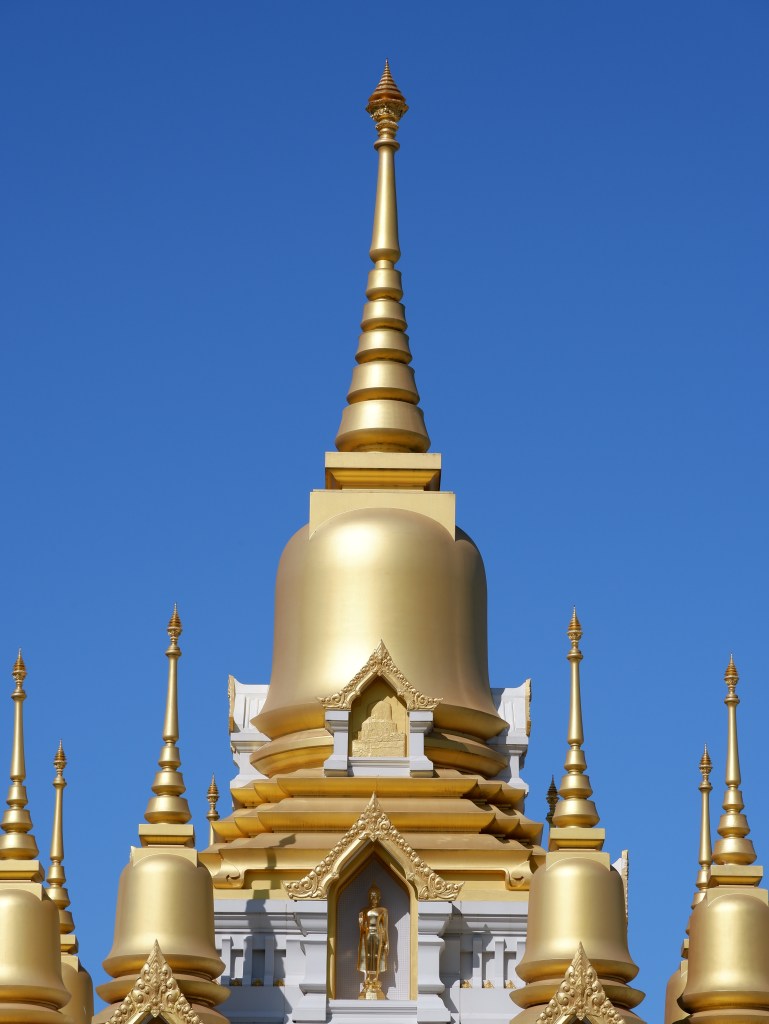
เจดีย์ทรงไทยมีหลากหลายรูปแบบตามยุคสมัยแต่องค์ประกอบที่ยังคงไว้จากสถูปเดิมก็คือองค์ระฆังคว่ำของเจดีย์นั้นๆ พระมหาธาตุเจดีย์เฉลิมพระเกีรติ ในเขตพุทธาวาสนี้ มีองค์ระฆังประธานล้อมรอบด้วยองค์ระฆังอีก ๘ องค์ รวมเป็น ๙ องค์ ซึ่งสอดคล้องกับรัชกาลที่ ๙
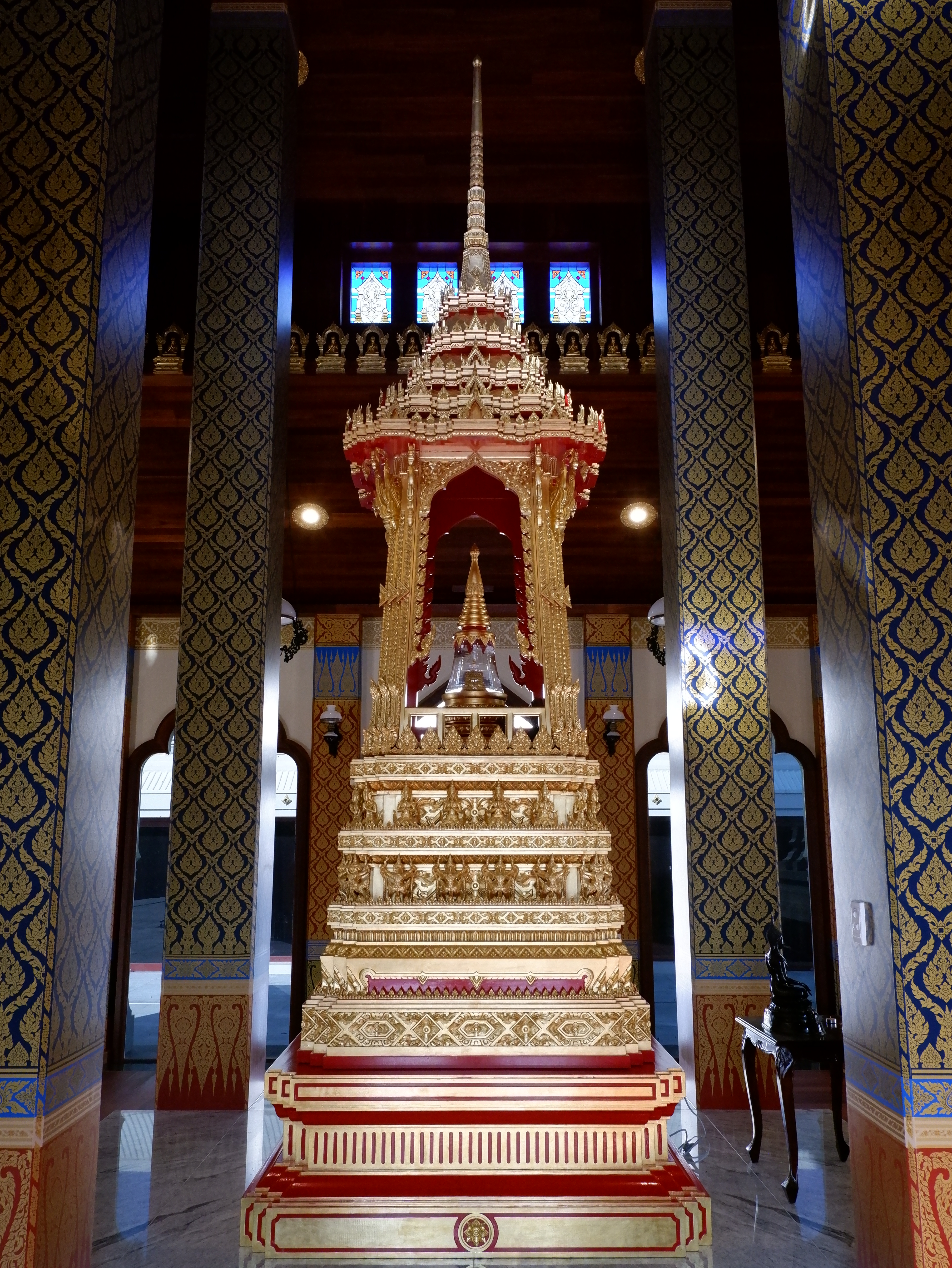
ได้อัญเชิญพระบรมสารีริกธาตุบรรจุไว้ภายในยอดฉัตร และเหนือบุษบกภายในอาคารของเจดีย์
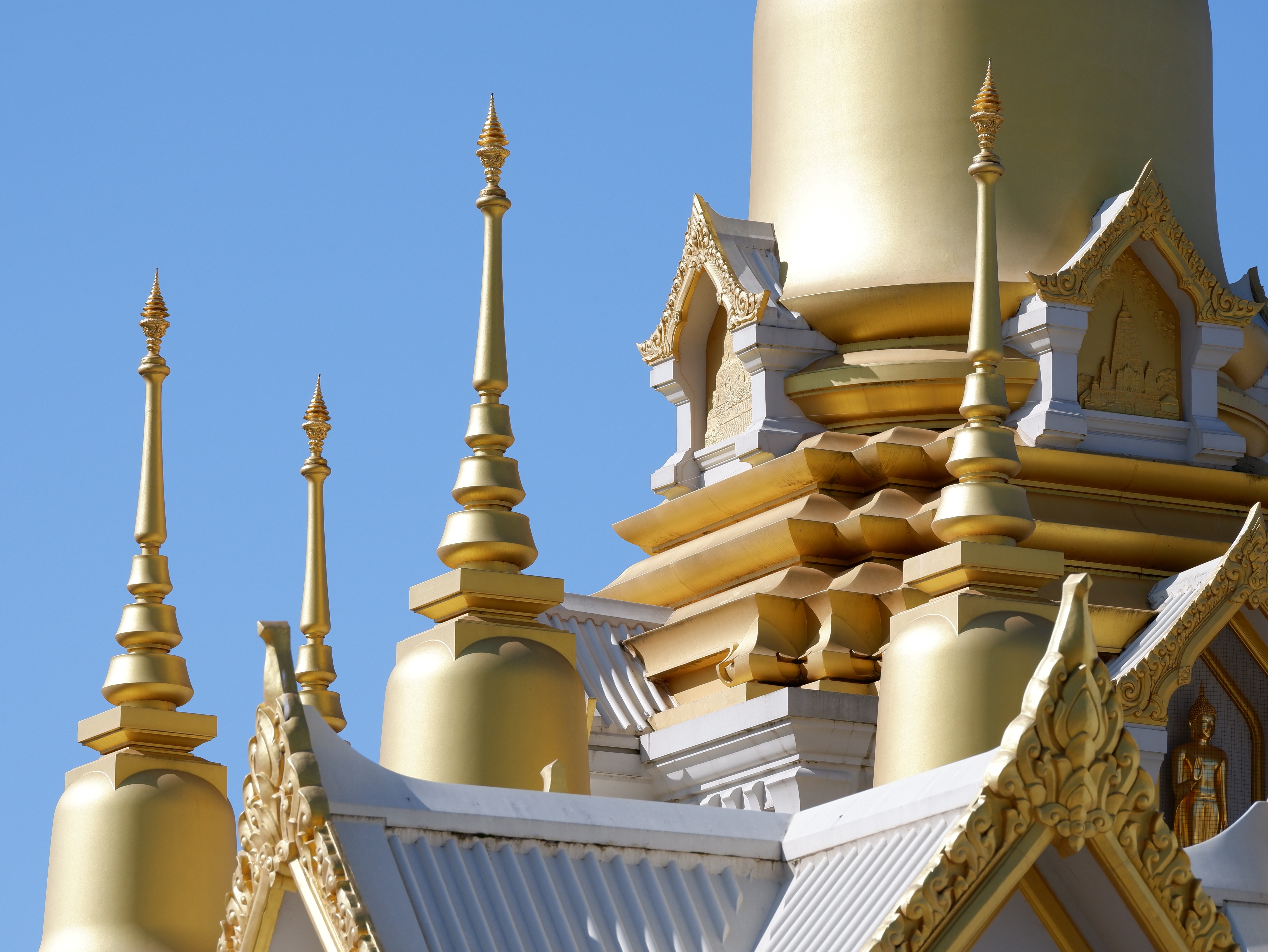
พระพุทธรูปที่ประดิษฐานในซุ้มรอบพระมหาธาตุเจดีย์เนื่องด้วยพระพุทธรูปประจำวัน ซึ่งสื่อถึงเหตุการณ์สำคัญต่างๆ ในพุทธประวัติ ซุ้มบนสุดมีลวดลายแสดงถึง ๔ สังเวชนียสถานในชมพูทวีป ได้แก่ ลุมพินี สถานที่ประสูติ ๑ พุทธคยาสถานที่ตรัสรู้ ๑ สารนาถ สถานที่แสดงปฐมเทศนา ๑ และ กุสินารา สถานที่เสด็จดับขันธ์ปรินิพาน ๑
English
A stupa is a monument that houses the relics of the Buddha and serves as a place for reflection on the virtues of the Buddha, namely his Wisdom, Purity of Mind and Compassion.
Early Indian stupas were mounds of earth with a parasole at the summit. This Buddhist architecture then spread with its people to various communities in Asia, each contributing their own art and local beliefs to the structure.
The Thai Stupa or Chedi typically has a broad base and tapers up into a spire while retaining the central bell-shape structure of the original mound of earth.
This Stupa has a total of nine spires representing the Buddha and Eight Arahants or Enlightened disciples of the Buddha. Relics of the Buddha are enshrined at the top of the main spire as well as within the Busabok Throne inside the accessible Stupa hall. Various relief sculptures and Buddha images on top of the Stupa convey significant events in the life of the Buddha.


 WAT DHAMMADHARO | วัดธัมมธโร